Friday, July 11, 2014

Peripheral Vision: Climate Change and Global Development in the 21st Century (Pt. I)

Summary


  • Global warming poses an existential threat to life on Earth. This existential threat challenges our capabilities and calls into question the viability and effectiveness of mechanically conceived grid maintenance options.


  • Solar Roadways' smashing crowdfunding campaign success provides a terrific opportunity to assess the current state of business crowdfunding in relation to the future of solar power.


  • Distributed investing and distributed electricity are part of a "grid revolution" that may structurally shift financial and political power globally from the 1 Percent to the 99 Percent and from the Core to the Periphery.


  • The distributed grid paradigm echoes current philosophical, engineering and economic models grounded in an ecological metaphor that values species diversity, small-scale experimentation, and distributed risk and parcelized decision-making.


The Cracking of the Global Grid


With its Indiegogo campaign winding down, folksy technology startup Solar Roadways has raised well north of $2 million from 48,000 funders, released a YouTube video that has received more than 16 million views, and for the moment can proudly boast of being the third most funded project in the history of Indiegogo.

Solar roads are likely not the first-best option, nor perhaps even the 10th-best option, for widespread capture of solar energy. Nonetheless, Solar Roadways' smashing campaign provides a terrific opportunity to assess the current state of business crowdfunding in relation to the future of solar power, what we will call sunfunding. The connections between crowdfunding and sunfunding exist. They matter. And they may surprise you. Let's roll the tape.

Crowdfunding has grown approximately 80 percent year over year since 2009, a pace expected to continue for the foreseeable future. In 2014, global crowdfunding projections approach $10 billion, a 20-fold increase from the $500 million raised in crowdfunding campaigns in 2009. If trend lines persist, in 2020, crowdfunding will deliver $500 billion in seed capital to nearly 10 million projects, in the form of donation, reward, lending, and equity-based investments -- generating millions of new jobs and more than $3 trillion in new revenue.

Sunfunding also has mushroomed. In 2013, solar power installations in the United States exceeded 4.5 gigawatts, a more than five-fold increase from installations in 2010. Because solar still only contributes less than 0.5 percent of electric power nationwide, the industry can assume a blue-sky future for years to come, with installation trend lines indicating potential capacity installation of 225 gigawatts in 2020, enough capacity in that single year to power nearly 40 million American homes.

Indeed, solar installations in the U.S. have rocketed so rapidly toward grid pricing parity with coal that analysts now predict utilities will construct few, if any, coal-fired power plants going forward. In the more optimistic of its future-oriented Scenarios, energy company Shell estimates that solar PV could account for 20 percent of global energy by 2060 and nearly 40 percent of the total by the end of the 21st century.

With remarkably aligned annualized growth rates of 75-80 percent, crowdfunding and sunfunding trends, depicted graphically, resemble nothing so much as the trajectory of space vehicles obtaining escape velocity from the earth's atmosphere. But for those with boots on the ground, the impact of these trends more likely resembles displacement associated with the cracking of tectonic plates. Or perhaps more aptly, the cracking of the global grid.

Next

In Part Two of this essay, we will consider some of the more radical implications of crowdfunding. In particular, we will spotlight the emergence of an "acceleration ecology" based on principles of self-assembly that guarantee organic, "hive mind" solutions will always outpace traditional, "command and control" grid options.


No Justification for Permanently Banning Sales Taxes on Internet Access Charges

For the first time since Congress enacted the Internet Tax Freedom Act (ITFA) in 1998, lawmakers are seriously considering permanently extending the moratorium on new state and local sales taxes on Internet access service and eliminating the "grandfather clause" exempting existing taxes -- changes that could cost states $7 billion a year in potential annual revenue.  Our new paper explains why Congress should do the opposite: allow all states to apply their normal sales tax to this service, just as they tax similar communication and entertainment services like long-distance telephone service and cable TV.

Even if Congress isn't prepared to let ITFA lapse, there's no justification for making the law permanent and eliminating the grandfather clause, as a bill that the House is expected to consider next week would do.  Congress can achieve all of its major objectives by enacting another temporary extension that leaves the grandfather clause intact.

A temporary extension would ensure that no new states and localities tax Internet access.  It also would continue ITFA's ban on "discriminatory taxation" of Internet access service and other types of Internet commerce -- for example, taxing these items at higher rates than other kinds of interstate communications or consumer purchases.

At the same time, another extension would avoid the problems that the House bill would cause, namely:

  • Eliminating the grandfather clause would strip Hawaii, New Mexico, North Dakota, Ohio, South Dakota, Texas, and Wisconsin of at least $500 million in annual state and local sales tax revenue they use to pay for education, police, and other services.  These states (and many of their localities) would have to reduce services or increase other taxes to offset the revenue loss. 


  • Eliminating the grandfather clause would put at risk numerous other state and local taxes that Internet access providers pay on the things they buy in order to provide Internet service, such as computer servers, fiber-optic cable, or even gasoline for their vehicles.  Almost all of these taxes existed before 1998, so the grandfather clause protects them from legal challenge.  But if Congress eliminates the clause, Internet access providers could challenge these taxes in court as indirect taxes on Internet access service and therefore voided by ITFA. 


  • Permanently extending ITFA risks widespread legal challenges by Internet merchants to a host of state and local taxes based on the law's prohibition of discriminatory taxes on electronic commerce.  ITFA's definition of "discriminatory tax" is broad and vague, but Internet companies have largely refrained from using it to challenge state taxes because they knew that if they were too aggressive, ITFA opponents could use this to argue for repealing the law when it came up for renewal.  But with ITFA permanently on the books, that restraint would disappear, potentially leading to widespread litigation.


Congress first enacted ITFA when Internet commerce was still in its infancy and high-speed Internet access was just becoming available to individual households.  Congress sought to balance state and local governments' need to finance essential services against Congress' desire to encourage the development of the Internet industry.  Even then, Congress decided that striking that balance entailed grandfathering existing taxes and prohibiting new taxes on Internet access only temporarily.


There is no need to continue treating the Internet as an "infant industry" and exempting it from state and local taxes that other industries must pay.  But even if Congress wishes to renew ITFA, surely its tax treatment should be no more favorable than in 1998 -- a temporary exemption for taxes on Internet access service, with pre-1998 taxes still grandfathered.


My Daughter's Disability Does Not Make Her Inspirational

Click here to watch the TEDTalk that inspired this post.

One day after receiving a request from an editor at HuffPost to participate in a discussion about Stella Young's brilliant talk on Inspiration Porn, I got an email from a reader of my blog. She wanted me to know that she had nominated me for a Very Inspiring Blogger Award. There are no accidents, my friends.


I was touched by the nomination. I am always grateful and honored when I am told that I inspire others. Far more complicated, however, is when they say the same about my autistic daughter.


I am not disabled. I do not carry the weight of the history that my daughter does. I am not thought of as less than. I do not fight daily to be seen as among rather than other. I am not feared nor alienated because of my differences. She is.


Is she inspiring? You bet your ass she is. But am I wary of the WAY in which others derive their inspiration from her? Extremely.


Brooke is not inspiring because she is autistic. She is inspiring because she lives her life in a way that commands respect and demands acceptance.


She is inspiring because she lives her truth. Because she grabs this life by the balls and makes it her own.


She is inspiring because she does not take the path of (apparent) least resistance and succumb to the pressure to hide the parts of herself which might make others, in their own insecurities, uncomfortable.


She is inspiring because she loves every last ingredient in the glorious soup that makes her who she is.


She is inspiring because by living unapologetically she inspires others to do the same. To proudly claim their identities and, in so doing, remove the stigmas that have for so long been attached to them.


I can think of no greater inspiration than a model of self-love and self-acceptance -- with or without autism.


Last year, my daughter inspired me to come out as a bisexual woman even when it wasn't "necessary," when I could have lived the rest of my days in the comfort of invisibility, passing for something more palatable to the mainstream.


She inspired me to live my truth by living hers. To understand the responsibility inherent in my privilege and to use it to dismantle it.


She inspires me to slow down and to shut up. To listen. To connect to people on a level far beyond the surface. To seek light. To laugh harder, love harder and live harder. To ask for what I need without apology and to give what I can without reservation. To abandon pretense and be who I am just as she, so richly, gloriously, beautifully, is who she is.


So yeah, my daughter is an inspiration. One of the best kinds. But not because she's autistic. To say that she is an inspiration to those of us without her challenges simply because she shows up every day is to perpetuate the destructive paradigm of othering and dehumanization.


But to see her in all of her messy, complex, multidimensional glory and to take inspiration from her grace, humor, self-awareness, self-advocacy, self-acceptance, self-love, joie de vivre and incredible generosity? Well, then you're onto something.


Because she is indeed one heck of an inspiration, at least to her mama.


Jess can be found at Diary of a Mom where she writes about life with her husband Luau and their daughters, Katie and Brooke. She also runs the accompanying Facebook page, a warm and welcoming community of 140,000 people, some autistic, some not, all, in their own ways, inspiring.

We want to know what you think. Join the discussion by posting a comment below or tweeting #TEDWeekends. Interested in blogging for a future edition of TED Weekends? Email us at tedweekends@huffingtonpost.com.

Pink Is the New Red

Recently I sat in on an energetic workshop for preschoolers at Chabot Space and Science Center in Oakland, watching 15 "Tyke Explorers" assume ownership of the entire Solar System in a kid-sized multimedia extravaganza called "Dance of the Planets."

Tyke wrangler Ken Yamata awarded each unadorned Styrofoam plate -- small for the rocky inner planets, large for the gas giants -- to the youngster who seemed most enthusiastic about that particular Solar System object. The girl who'd thrust her hand high in the air when the red planet was offered up to the group claimed Mars.

"Why did you want to be Mars?" I asked her afterwards.

I thought she might say that Mars is closest to being like Earth. Or that it may be our next home. Or even that it is named for a powerful god. I was not prepared for her unabashed reply:

"I like pink. It was closest to pink."

And this was true. All the undecorated plates were stark-white except for one, which was rose-hued: Mars, the perfect planet for a young Martian princess.

2014-07-10-MarsGirl.jpg
Princess of Mars? (Credit: Transmedia SF)


Is going after the hue rather than the planet a manifestation of the "pink princess" culture surrounding girls from soon after birth, at least until they're able to choose their own wardrobes and dress themselves? Can we blame this "pinkification" entirely on Disney films and a shopping spree at Walt's company store, or is it more pervasive than that, persisting even as the girls mature into young women?

I read an article in which a female high-school senior with engineering ambitions complained about all the pink, pretty, curly, flowery announcements she'd received inviting her to be a "Web diva" (rather than "Web developer"). She called it "degrading."

Tech companies who use ingrained gender associations to attract qualified women to their ranks are not thinking beyond the limits of their own cultural associations. They are certainly not thinking of the young women they want to hire as anything more than an underrepresented category easily and superficially defined. The nobleness of the goal is sadly diminished by the means.

We must share the blame as a culture. Why do we consider the color pink so demeaning and limiting while we persist in allowing it to define our young women? Is this an indication of how little we value girls and their futures?

If the tech companies need to boost their female ranks, why can't we at the very least use their misappropriation of pinkness as a teaching moment, call them on their shallow and stereotypical representations and demand that they do differently? These days I hear a lot of complaining but not even a faint call to action.

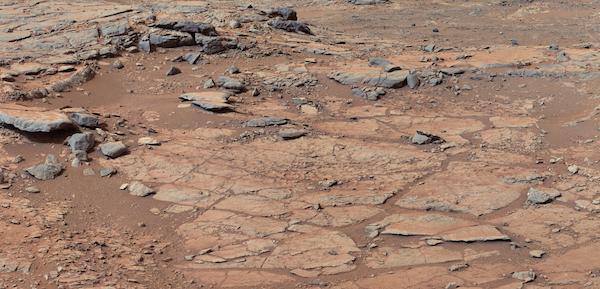
Color is a tool, not only on Earth but beyond it, where scientists struggle to represent colors that defy precise definition with terms like "false color," "perceptive color," and "representative color." What's missing is "true color," because there is no absolute true color in our universe.

Just take a look at our "red" neighbor, Mars, in the night sky, glowing from reflected sunlight. It's more rosy than red, and certainly not crimson, scarlet or any of the more vibrant reds. The color is being filtered through our own atmosphere.

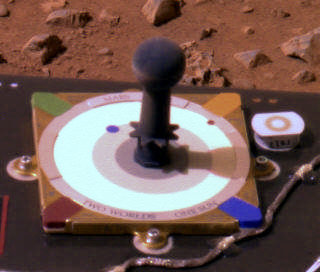
"MarDials" are color-calibration devices that allow scientists to adjust colors recorded by cameras on the surface of Mars, where hues are naturally filtered through the salmon-colored sky and a considerable amount of dust in the air, unlike the blue-sky view we have on Earth.

2014-07-10-PIA16568.jpg
A photo from Mars' surface. Not red! (Credit: NASA)


2014-07-10-dialmix3fin.jpg
MarsDial: Choose your Mars hue here! (Credit: NASA)


The "MarDials" on Spirit and Opportunity have this inscription: "Two worlds, one sun." The sunlight may be constant, but the intervening variables between the two worlds -- from atmosphere to digital processing to individual computer-monitor and printer settings -- add layers of insistent hue-shifting filters. Human perception is just another filter.

The color pink means nothing, certainly not "girly." Up until the mid-20th century, boys were routinely dressed in pink and girls in blue. A trade publication published these guidelines in 1918:

The generally accepted rule is pink for the boys, and blue for the girls. The reason is that pink, being a more decided and stronger color, is more suitable for the boy, while blue, which is more delicate and dainty, is prettier for the girl.


That's just further proof that we, as humans, are the ultimate arbitrators of colors -- and their meaning.

The girl who chose Mars because it's pink may indeed be the next Martian warrior princess, fully empowered by the color she embodies, because, as we all know, pink is just a lighter shade of red.

Harley-Davidson Signals Climate Change Is Mainstream

Is there an answer to climate change? I believe there is, and it's already underway. To borrow terms from technology, a distributed solution has moved along the technology adoption curve, through the innovator and early adopter phases. Now, we're entering the mainstream.

We've watched this distributed solution take form for a while now. Government regulation, which lagged at the federal level, is enacted globally at the city and community levels. Individual power plants are switching from oil and coal to the lower-emitting natural gas, on their own and without regulation. Corporate Social Responsibility, which was isolated in its own department, has in many companies been distributed across the enterprise, with CSR departments providing only specific support functions like competitive benchmarking, measurement and reporting.

How do we know our distributed solution has gone mainstream? Harley-Davidson, whose brand is arguably nonexistent without a combustion engine, just introduced an electric motorcycle. The dominant brand in motorcycles, Harley sells 36 percent of all motorcycles sold in the U.S., including 52 percent of all on-highway bikes. It has a well-entrenched formula for customer loyalty that includes its unique sound. That's so important that the company tried to trademark it, only giving up in 2000 after six years of legal wrangling.

But Harley's core customers are largely boomers so its average customer's age -- and as recently as 2010 its market share too -- were declining.

The company needed to appeal to younger generations. It's doing so with smaller, cheaper bikes and an electric motorcycle called the LiveWire.

How does a company capitalize on one of the most beloved parts of an electric vehicle, its silence, when your brand is synonymous with deafening noise? By creating a brand new sound. As Charles Fleming wrote in the Los Angeles Times last week:

The (Livewire) debut marks a dramatic departure for the 110-year-old motorcycle company, which is hailed or hated for its powerful engines, loud exhaust pipes and brash rebel attitude ... It accelerates like a ballistic missile and sounds like a jet engine turbine.

As LiveWire designer Kirk Rasmussen said, "People get on this thinking 'golf cart,' but they get off it thinking 'rocket ship. "...That should appeal to younger male riders in particular, while the electric aspect should appeal to younger riders of both genders, who tend to be more sensitive to environmental (sic) matters.


There are many more dramatic innovations happening in emerging companies, like mushroom architecture described last week in Huffington Post -- stunning structures that grow themselves and are completely recyclable. But there are just as potentially meaningful changes in existing product lines from industry leaders, such as J.P. Morgan Chase's bond funds for green projects.

Environmental efforts under the CSR rubric are also advancing. Most stunning for those of us who follow Apple Computer and its storied founder Steve Job's rejection of social responsibility is new founder Tim Cook's embrace of "better" ideas for reducing its environmental footprint. Stock market website SeekingAlpha reports on Apple's change of heart:

The company was one of Greenpeace's Do Not Buys for a long period of time. Yet in the past year Greenpeace has been applauding Apple for eliminating toxic materials, materials in conflict areas, and setting a bar in 2014 for climate leadership. The company is now using 100 percent renewable energy at all data centers, which is setting the bar in the tech space.


These mainstream solutions are most remarkable when you realize they are happening independently, across industries, across companies, even when the innovations appear to undercut a successful, established brand, as in the case of Harley-Davidson.

From companies to individuals to institutions, everyone seems to be a part of the distributed solution. Conservative government and business leaders advocate climate change action in a just released report "Risky Business." Millennials are moving away from private car ownership. And Harleys may soon sound like jet engines... or nothing at all.

Leveling the Playing Field: My Lesson From Stella Young and the Dangers of "Inspiration Porn"

Click here to watch the TEDTalk that inspired this post.

In 1913, Webster's dictionary defined inspiration as "the act of power in exercising an elevating or stimulating influence upon the intellect or emotions -- the result of such influence which quickens or stimulates."


That definition has clearly evolved as times have changed, changing what society considers inspirational. It's manifested into the idea that we as people -- as individuals -- can become something larger than ourselves. In doing so, however, we perhaps do more harm than we're aware of.


When you do something unexpected or out of the ordinary, it rarely starts out as such. You do it because you want to or because it could lead to a better way of life. You're not thinking about the lasting impact it may or may not have on people, or how they will react to your decision to do something crazy.


It's simply human nature, because, in a way, that's how people survived prior to the dawn of the digital age. However, when you apply the notion of exceptionalism to disabled individuals as Stella Young has, it's no longer about looking at accolades and accomplishments as reasons to shower someone with praise or call them an inspiration. It's about making the playing field level for everyone.


In her TEDTalk video, "I'm Not Your Inspiration, Thank You Very Much," she entertains the idea that disabilities don't make the person who has them exceptional. By the same token, Stella also emphasizes the fact that it's not always miraculous when someone with a disability accomplishes something -- because it's usually something that the average, everyday person does as well. She shows examples of how the media often objectifies disabled people, highlighting the use of the term "inspiration porn."


"[We] are more disabled by the society we live in than by our bodies and our diagnoses."


Stella goes on to say that the people in the examples she shows "are not doing anything out of the ordinary. They're just using their bodies to the best of their capacity."


As a writer with cerebral palsy, my heart fluttered when I heard her say that because I completely understood where she was coming from. I've always thought of my place in the world as simply a member of society -- not a "writer extraordinaire" or someone bestowed with talent and "a gift." I've always thought of myself as someone who's just trying to make ends meet. Sure, I do things a little differently than everyone else, but I don't see that as reason for people to take exception to me.


I think that speaks to Stella's belief that considering a disability an exception is an injustice. That makes me feel normal. In fact, I don't think I've ever felt that sense of normalcy as strongly as the day I landed my first job as a columnist five years ago. It was exceptional for me, because I'd finally reached the top of my personal mountain. However, I didn't quite understand why people were calling me an inspiration after just days, even mere hours, after getting the job.


Was it because I'd followed my childhood dream, or was it because I was a person in a wheelchair overcoming obstacles?


It took me awhile to decipher between the two, but I took the flood of congratulatory e-mails I received that day as signs of recognition. They were my measuring stick of sorts -- little reminders that let me know that even if I didn't have it all figured out at that point, I at least knew I was on the right track to becoming recognized as a writer -- a person -- rather than "a girl in a wheelchair."


If anything, those e-mails were my motivation to give people more reason to change their minds about the word 'disability.' I wasn't concerned about being an inspiration or even making any sort of big impact at that point. I just wanted to try to get the word out there that my cerebral palsy doesn't make me any less different or loved than anyone else.


Now that I'm in a position where I can use my work as a model for disabilities, I often find myself following in Stella's tracks. I want to convey the idea that I'm one writer out of a million around the world. I just happen to be in a wheelchair, and the fact that I can use my hands and fingers more efficiently than my legs isn't such a big deal as it relates to my cerebral palsy. It's just a "knack" that I have -- the same way every person on the planet has his or hers, too.


To me, that's more of an asset than an inspiration. If people look at me or my work as an inspiration, however, that's their choice.


Stella concluded her video with a number of things that really hit home for me -- one being, "I really want to live in a world where disability is not the exception, but the norm."


It puts an exclamation mark on everything disabled people have long been fighting for and gives rise to the notion of "questioning what you think you know" about disabilities -- or anything else under the sun.


We want to know what you think. Join the discussion by posting a comment below or tweeting #TEDWeekends. Interested in blogging for a future edition of TED Weekends? Email us at tedweekends@huffingtonpost.com.

What I Learned From a Year of Software Engineering

In my first job out of college as an investment banking analyst, people used to joke about the long hours and frequently disrespectful treatment of junior employees as a form of "character building." It was the kind of joke that people in the industry often made: uncomfortable realities that we referenced half in jest, and half in earnest as strange, deranged badge of honor. In spite of it being a hyperbole in a warped industry, the truth is I learned a lot more about myself than I expected and it did make me grow up. I learned that I was much more idealistic than convenient for the job I had chosen. I felt, deeply, my physical limits without enough sleep and my own brittleness under pressure. Eventually, it became almost impossible for me to cry over anything work-related, even when there were cuss words involved.

This joke of a phrase -- "character building", probably seems overly generous for nine-to-five jobs that might be productive but hardly dangerous or at the forefront of reimagining humanity. But in my ordinary life so far, every job has on some level illuminated, fortified or chipped away pieces of my mental and emotional being. Some of these are things I have always known about myself, others I have suspected -- still others I never knew. I worked for non-profits after banking and quickly realized that for all that -- I was perhaps not idealistic enough. I could not breathe and live a cause without a slow, systemic slippage into some level of intellectual doubt. Those tendencies, and a demanding perfectionism, were counterproductive when progress sometimes required a greater tolerance to kick-start. I learned these things that had at first felt like irrefutable limitations but now are clear insights of what I must let go of in part to grow.

And now, a year later into a career pivot that my 22-year-old self could not envision, I am sometimes more uncomfortable than ever about the things I am learning as a software engineer -- in that feeling outmatched by the pace of your necessary growth but nonetheless the most worthwhile kind of way. I have qualities that amplify well with the job, but there are also tendencies grate against the paradigm. One of the most difficult things for me has been inviting and diving into the necessary chaos to truly understand something -- the willingness to break things, to take things apart, to use things not as instructed to reach limitations and bare principles. Decades of education of wanting the right answer and a perfectly made thing feel, at times, slow to undo. But everyday it is more deeply impressed upon me that the ones who can really reinvent are those who learn how things work by experiencing them deeply rather than by simply being told.

It is often easy and gratifying to imbue one's view of technology with the air of magic and fantasy -- that was certainly a common default reaction of mine when I had limited technical knowledge, but that ultimately defeating. To equate complexity with mystery is not productive to learning, solving or inventing. Even the most complicated system is built by the same small components -- you have to believe in your ability to start somewhere. To really internalize that things are built, piece by piece, empowers the faith that you can build things. It does not always feel natural to simply stop accepting the system that you are given as some unchanging, partially understood truth. It feels exhausting at times to not be able to simply walk away and say, "I don't know." In my one year so far I try to remind myself constantly of the growth post that discomfit and to learn to live with that feeling of not knowing, but willing of discovery.

In an industry awed and driven by cerebral achievements, there exist the noisy games of some trying to assert intellectual prowess through various loud points of view. For personalities like mine that care a lot about "the best way to do something", it can be an intimidating and confusing navigation of opinions that all seem tremendously self-assured. I finally learned that this is basically an inimical waste of time. For every opinion that exists, there is almost always an inverse of it that can sound equally reasonable. Sometimes it is a matter of preference, other times it is a matter of circumstance. You can only really learn what is right for your set of constraints, aesthetics, and needs, if you are willing to be wrong occasionally through experimenting.

I realized that pride-induced-fear and fear-induced-pride are some of the most potentially destructive things for what I do.

A year and sometime ago, I had the crazy idea of trying to do something I had no idea how to do because I had a rather naïve desire to build some online non-profit community platform. I remember vividly I got into this because of the practical desire of wanting to build something that makes someone's lives a little better. I could not understand developers that had all that power to help people but chose to contain themselves in theoretical bubbles.

Yet along the way I discovered how much I loved solving technical challenges and appreciated code as its own abstraction -- and slowly I became more disengaged from real life problems and the people needing solutions. I immersed myself in the curiosities and intricacies of technicalities instead.

I suppose on some level that makes me a real software engineer now and there is some rite of passage for that. But there is a part of me that misses my own indiscriminate enthusiasm for what it could do, rather than what the code looked like (even if I will always appreciate a beautiful, maintainable piece of code). Striving for abstract perfection feels worthy, but it is not real life with its inherent messy designs and tradeoff. To be ruled by the dogma of your craft is to lose sight of the real engineering question here -- how do you balance a purely technical pursuit with actual impact? I hope I never forget that.

A year of software engineering -- perhaps not quite hyperbolically character-building, but there is some shifting and stirring for sure.