Wednesday, April 16, 2014

The Writers Workbench: The Flashlight Edition

I hadn't really expected to devote much attention to what are basically flashlights. In fact, when I came across the new series of Energizer products, I only contacted the company about reviewing one of them, an item which I thought would be appropriate for using when on the road. But the representative really wanted to send as much of this new line as I'd we willing to look at, so I figured, what the heck, okay, send me the whole thing. (Well, almost the whole thing. One light overlapped another a bit, so I passed on that.) As it turned out, I ended up quite glad I got them all. Though similar, they each serve a unique function, and best of all, I never expected to be so impressed with... flashlights?! But these are really good, each of them. So, I figured I'd devote the whole column to them -- yes, flashlights. Go figure.

The flashlights use what Energizer calls Light Fusion Technology. Honestly, I have no idea what that ultimately means -- companies all have their priority descriptions, and my experience is that sometimes they have meaning, and sometimes they don't. But what matters most is how well they work. Whatever Light Fusion Technology is -- it works well.

These aren't your standard, traditional flashlights. They use LED. My experience in the past has been that LED lights suffice but never much more than that. These are bright and powerful. And they offer additional capabilities that you don't get with a traditional bulb light. In fact, I have a couple of flashlights laying out for easy grabbing when I plan to wander somewhere at home in the dark, and more often than not, I find myself grabbing for the "2 in 1 Light" than my old fave flashlight. More on the "2 in 1" below.

I had one quibble with all the Energizer lights at first. They all have a TryMe test feature, which is certainly nice when sitting on a shelf in a store. But there was no information on how to turn the feature off until you read through the manual and found the explanation in in small print. And honestly when was the last time you thought of reading an instruction manual of a flashlight? The good news is that I've been told that info on turning off the TryMe feature has now been added to the product (or box) with a sticker. So, you should be fine now.

  • Energizer LED 2 in 1 Light

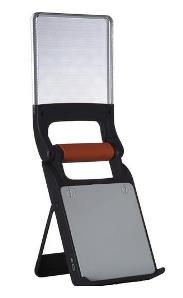
  • Energizer LED Pop Up Lantern

  • Energizer LED Folding Lantern


***


ENERGIZER LED 2 in 1 LIGHT

At its heart, this appears at first glance as a standard flashlight. It has a directional light that delivers a bright 75 lumens and should run for about 10 hours.

Where the "2" part comes in is that it also can serve as an area light. If you hold down the on-off switch, the front light stays off, but the handle brightens up and becomes like a flood light. (It's all in one direction -- only one side of the handle lightens, so it shines in just one direction, not 360 degrees.) The area light provides 100 lumens.

2014-04-09-Energizer2in1.jpg


Then another nice feature kicks in. The light is dimmable. By clicking the on-off switch, you can toggle through the settings. And at its lowest output, you can get up to 100 hours.

(Side Note: For all the lights, I had difficulty getting exact information on runtimes. What the box says would sometimes differ with what was on the website, which was different from the information in the manual. And that was occasionally a little different from what the company rep would tell me. I've tried my best to give as accurate details as I can, balancing what I was told with what makes the most sense.)

There is a convenient hanging hook, which particularly comes in handy when using the area light. And the device is water resistant. It comes with four AA batteries included.

At the time of writing, the "2 in 1 Light" retails for $25, but it could be found online for $17.50. Certainly you could fine a cheap, basic flashlight for less (and some for more), but it offers several convenient features that you wouldn't get with a standard flashlights, if such things are valuable to you, notably the area light, and dimming.

ENERGIZER LED POP UP LANTERN

My initial reaction when receiving the Pop Up Lantern was that it wasn't something I'd be interested in writing about, but after using it for a while, I came to appreciate it a great deal. Particularly nice is that it's collapsible and can function in either mode, while being very portable. At full use it's seven inches tall, and has a long neck which is illuminated on both sides -- like a lantern -- so you get full, 360-degrees of light. It delivers a powerful 150 lumens and has a 100 hours runtime. (I believe this is likely at the dimmest setting. Again, by clicking the on-off switch, the lantern is dimmable.)

2014-04-09-EnergizerPopUp.jpg


You can lower the neck though and turn the thing into a compact package only four inches high. It still will deliver a bright-enough light to illuminate a room somewhat.

There is a big looping handle that makes this very convenient for hanging almost anywhere, and it's therefore particularly ideal for camping -- like any lantern -- or perhaps outdoor patio use. But what I also found and appreciated is that when collapsed to the compact mode, it made a terrific night light for a bed table. If you have to wander through a dark room at night, the compact light is plenty enough to help, but not overpowering like it might otherwise be at full floodlight height.

It too is water resistant, comes with four AA batteries, and retails for $25, though I found it for $18 online.

ENERGIZER LED FOLDING LANTERN

I wasn't quite sure what to make of the Folding Lantern when I first got it. It's oddly shaped and seemed to be much more a lantern than flashlight. But then, that's what it says it is. And by the time I got finishing testing it -- especially since I had reason to actually put it to full use (more on that later) -- I came away blown away by how good it was.

The Lantern pivots open and can go from illuminating a 180-degree area when closed and compact, to providing 360-degrees of full floodlight when open. It can deliver a glowing 300 lumens -- or less when dimmed. (So, again, yes, it's dimmable.)

2014-04-09-EnergizerFoldingLantern.jpg


It can run from 40 hours at full power up to 100 hours when using eight AA batteries. However, in an interesting touch, the lantern can also run on just batteries. It will be just as bright, but the runtime is cut by a little more than half, running from 15-40 hours. Using four batteries saves money, but as you see you get more than twice the runtime when it's operating with eight batteries.

When folded closed, it becomes quite compact. There is a big handle, so that when open the lantern can be hung to illuminate a wide area like a floodlight. But you can also pivot the frame and use the base as a stand. It too is water resistant.

The Folding Lantern is intended for camping and outdoor backyard activity, and is wonderfully suited for such activities. But as mentioned above, I came across a firsthand use when testing it, and found another impressive use for the device.

As luck or fate would have it, the night I opened the package to test it -- my neighborhood had a blackout. (I suspect that Energizer arranged this...) Using other lights at hand, I decided to test the Folding Lantern under those conditions, rather than wait until later -- and it was absolutely terrific. The amount of 360-degree light it provided around the room was seriously impressive, and using its stand was very convenient. It really brightened the room significantly -- not like having my lamps on, of course, but it was reasonable comfortable.

(For that matter, I decided to add more light by extending the Pop Up Lantern, and even used the 180-degree area light of the "2 in 1" light. I hardly expect most people to have all three Energizer lights at hand, but I was very glad to have them at that time myself.)

I have one quibble with the Folder Lantern. It appears to have screws on the back for the battery compartment -- but it turns out these are just plastic latches holders. The manual says nothing about this, so for the longest time I was trying to unscrew all four of them to remove the back, and they kept spinning. (I thought I had broken something.) A mere quarter turn was need to remove the pins. They feel a bit fragile compared to the rest of the unit. Also, you have to wedge out the back panel to get to the batteries, it doesn't remove easiest, and I was concerned about breaking it. Though that fear appears unnecessary, since things removed fine.

The Folding Lantern isn't something for everyone -- but if you have need for such a thing, or if you want a back-up light in case of black outs, it was absolutely wonderful, and one of the most unique battery lights I've come across. It retails for $35 and at the time of can be found online for $25.50.

"The Writers Workbench" appears monthly on the website for the Writers Guild of America. To see this entire column, with additional "TWW Notes," please click here.

***


To read more from Robert J. Elisberg about this or many other matters both large and tidbit small, see Elisberg Industries.

Tuesday, April 15, 2014

Facebook and the Future of Global Governance

Facebook has become a critical platform for international exchange that allows people around the world to seek out peers with similar interests and to begin serious exchanges with them about how to create a better world. Although Facebook is a for-profit organization that treats its users as potential advertisers and uses personal information gathered from postings as a private commodity for sale to third parties, it is still the best means to reach out to a broad audience and to develop a global audience.

Facebook was not intended for serious intellectual and political exchange. At present, you cannot easily seek out other people with common interests (or by region) using a search on Facebook and you cannot systematically store the materials that you send or receive through Facebook for easy reference. Information posted is designed to essentially disappear within a few days. In addition, there is no way for third parties to develop original apps to run on Facebook that would allow users to expand its functionality or customize their pages. There are many ways that those actually using Facebook can carry out the innovations necessary to make it a meaningful means of sharing information.

But in spite of all the limitations of Facebook, an increasing number of politically conscious users are pushing it to be a platform for profound debate on political and social issues, both locally or internationally. Even in its primitive current format, Facebook offers the possibility for a broad conversation with thoughtful individuals around the world and it is increasingly populated by individuals from developing nations, and thoughtful activists, who may even be middle school or high school students. That is to say, although it may not have been designed for that purpose, Facebook offers an opportunity for people who are completely locked out of the policy debate to contribute. Although there are specialized platforms for internet exchange available, Facebook is unique in cutting across class lines and international borders.

If we compare Facebook in terms of the potential for an individual to advocate for policy, develop a broad base of support on issues and seek out expert opinion, Facebook in its primitive current form is still years ahead of the United Nations, the World Bank, OECD or any of the international organizations supposedly engaged in global governance. Although those international organizations carry out their own informed internal debate, which is then distributed in a one-way manner to the hoi polloi via rather arcane technical texts, there is literally no means for someone like me, let alone a Nigerian merchant or a Chinese high school student, to have any say at all on policies those organizations put forth that impact the entire world.

Let us compare what Facebook has the potential to become with the current United Nations, the main institution of global governance. The United Nations is extremely limited in its mandate and recognizes nation states alone as its members (although it works with corporations and NGOs on a daily basis). With the governing institutions of most nation states torn apart by the interests of multinational corporations and internal class divisions, often with a tiny minority monopolizing access to political power, there is literally no way for ordinary citizens (even in the tens of millions) to put forth a proposal to the United Nations General Assembly, let alone to pressure the United Nations to implement policies.

Facebook, the company, did not actually build Facebook; we did. The company Facebook was able to secure massive low-interest loans at our expense and use them to scale up global networks. Anyone with access to that much capital could have built a "Facebook." We, the people, did the work of actually populating Facebook with people and contents.

We can think of the founders of Facebook as the equivalent of the robber barons who built the Union Pacific railroad in the 19th century. Although figures such as Clark Durant or Mark Hopkins raised money for the Union Pacific and built it for the shrewdest of profit motivations, over time those railroads were shaped into more rational institutions through the active demands of their users, people who advocated for such acts as the Interstate Commerce Act of 1887, which outlawed short-haul discrimination and other predatory practices. Eventually, the free-wheeling railroads were made to conform to strict codes in the 20th century and moulded into reliable utilities.

It is not a moment too soon to start the hard work of transforming Facebook -- or some avatar of Facebook -- into a platform for participatory democratic global governance. We don't have long to design a global response to the crisis of climate change through meaningful coordination of humanity's actions; the institutions we assumed would respond to that global challenge have failed miserably.

We can't wait to form human networks that can bring us together as a species. Now, sadly, we are fully integrated through systems of distribution, logistics and data distribution, but we do not know each other at all. We must overcome our ignorance and indifference to each other and form an entirely new form of participatory global governance to respond to global threats. At this moment Facebook may be our best hope.

Until we make forceful and concrete proposals for what Facebook could be and through our will and our creativity push Facebook in the direction it should move, it will not become anything more than a place to exchange pictures of soccer games and birthday cakes.

Here comes the hard part. Building a true, common, global community online by lobbying Facebook directly for changes in the rules of governance (allowing the users to decide by democratic process what the design and structure of Facebook will be) is near impossible in that such a for-profit organization has no incentive to accept such demands. On the other hand, alternative social networks tend to be extremely limited in their participants and are even farther from true representative governance than is the commercial Facebook. For liberal thinkers to exchange their liberal thoughts with each other is not particularly helpful to anyone. What we need is a broad discourse in terms everyone can understand.

The first step is to present a concrete vision for the future of social networks as a form of global governance and for the importance of that vision for the daily lives of the users of online social networking services like Facebook. That vision should include basis rules of governance first for how Facebook (I use Facebook here as a term for social networks in general, both contemporary and future) will be governed internally: how individual users can debate what the policy for Facebook at the micro and macro level should be and proceed to propose that policy for approval within the Facebook community.

The governance of Facebook starts with reforms that make it more accessible, more transparent, and more oriented to the needs of individuals and communities. We can start with simple reforms like allowing individuals to design applications on their own within Facebook and have the right to give or sell them on their own to other members.

That process could involve the formation of local elected communities for debating and determining local and global Facebook policy. Unlike the United States government, Facebook can serve as a place for input concerning policy and voting to approve that policy. We must recognize that Facebook is potentially a political entity (and already serves that role) and endow it with the proper functions to serve that purpose locally and globally.

Once internal rules are in place for how Facebook governs itself, the next step will be for Facebook to create structures for larger forms of global governance. Of course Facebook does not have offices or anything like the resources of a government, and perhaps it does not require them. At the same time, we must remember that governments around the world are hollowing out at a rapid pace these days and are not serving the function of governance.

The nature of governance in a future "Republic of Facebook" cannot be dictated in this article; it must be worked out through a series of meetings between informed and visionary figures who are committed to building a better world. We can imagine something like a constitutional convention for Facebook that would do that initial work of setting forth a vision and following up with continued refinements.

Of course those who want to employ Facebook merely as a place to post photographs of grandchildren and hamsters are free to do so. But for those committed to doing something greater, there are several directions possible for the advancement of the next generation of Facebook. Some of those directions suggest a new vision of governance.

A systematically administered Facebook could serve as a place for those with similar concerns around the world to meet and propose new projects for collaboration, new solutions to common problems. It could be a means for those who pursue similar goals in every corner of the globe to seek partners and collaborators for research, policy debate and implementation. In an age of limited financing, the potential to share funds between similar groups offers tremendous potential.

Of course Facebook, or whatever network replaces it, does not serve the role of a government in the full sense of the word. That role can be left to local governments best equipped to respond to the problems of broken sewers and electric grids. But when it comes to identifying an effective response to climate change by coordinating between groups around the world and implementing the solution, an improved Facebook can bring together the stakeholders in a sense that so-called legislatures full of professional politicians cannot.

If we have the will, and a sense of obligation in the face of global crisis, the platform of Facebook can be transformed into a legitimate form of global democratic governance. Some parts of that new system will build on the best of governance from the past 3,000 years, but other parts will be, perforce, unprecedented in human history and maybe even offer new hope to those who despair of humanity's capacity to rise to today's challenges.

------------

This article was originally published by Truthout on April 3, 2014.

link

Saturday, April 12, 2014

'Privatization' Is Not 'Privacy'

Author's note: I had the privilege on April 4 of delivering the following remarks as part of a panel on "Creating the Politics of Privacy," a session of the capstone conference for Ohio State's 2013-14 series of campus-wide programs on the distinction between public and private.

America's cultural turn in recent decades toward a glorification of the private and a denigration of the public has coexisted with what quite obviously is a deterioration in privacy. As individuals, we have dramatically less capacity than in earlier decades to control information about even the most personal aspects of our lives. This is not just historical coincidence. The cultural turn to the "private" has actually hurt privacy.

What I mean by a cultural turn is that, for the last 35-ish years, U.S. law and politics have moved away from the public-regarding orientation of the New Deal and its programmatic outgrowths and toward the individualist orientation of Reaganite small-government conservatism. We can see these moves in a variety of ways that implicate the private/public distinction. For example, we know that public institutions, such as schools, simultaneously create both public value and private value. They help both to benefit society through an educated citizenry and to prepare individuals for economic self-sufficiency. Yet our public policy toward schools has increasingly emphasized only their private value as providing persuasive reasons for their support.

Likewise, private action simultaneously has both private and public impacts. What I do as an individual both serves my personal needs and gratifications and imposes externalities on others. Not all externalities are positive. Yet courts and politicians have increasingly resisted treating negative externalities as a sufficient justification for regulation. Supreme Court decisions limiting Congress' powers to keep guns away from schools or to provide federal remedies for domestic violence are perfect examples. The court's 2012 decision that Congress lacked power under the Commerce Clause to compel the private purchase of health insurance was based on legal arguments that earlier courts would have rejected out of hand.

To understand how these developments have hurt privacy, it is helpful to note that both legal and ordinary discourse commonly use the concept of a private/public distinction to mean quite different things. When we talk about the private/public distinction, we sometimes mean to refer to what might better be called the privacy/publicity distinction. This is a distinction often seen in terms of categories of information. Some information, personal information, we are entitled to keep confidential, or at least closely under our control. Other information about us is public. Third parties -- indeed, society at large -- are entitled to know and to disseminate such information.

The private/public distinction is often used, however, to mean something analytically different. It refers to a distinction in the legitimate locus of power that might best be called the private/governmental distinction. That is, there are activities in which we engage in which society presumes that everyone is entitled to govern their own behavior. People generally regard raising families or running businesses as paradigm examples. To various degrees, our behavior in these domains may be constrained by law, but the default position is individual autonomy. There are even aspects of our autonomy -- choice of religion, for example -- that the Constitution forbids government to constrain. "Private," as conceived by the private/governmental distinction, has no necessary connection to secrecy or intimacy. When we say a shopping center is private property, we refer to its governance, not its confidentiality.

Governmental action, of course, is distinctly different from private action. Only persons chosen through constitutionally approved processes are entitled to wield government power. That power is subject to constitutional limits. Its exercise is subject to mandatory norms of equality and due process. Notably, the Supreme Court in the mid-20th century increasingly identified a variety of private acts so entwined with government as to become "state action" also subject to mandatory constitutional norms. The paradigm case would be private ownership of a so-called "company town." The Court has now significantly retreated from that position, with the consequence that large swaths of what had once been viewed as inherently governmental functions are increasingly turned over to private hands, with far less public accountability. Private prisons are the perfect example.

So how has the cultural turn favoring the private in the private/governmental distinction weakened the cause of privacy in the privacy/publicity distinction?

First, vast quantities of information we instinctively put on the privacy side of the privacy/publicity distinction are now in the hands of third parties who enjoy their own presumption of autonomy under the private/governmental distinction. That is, if a firm operating a social network or selling merchandise online possesses information about me, they are entitled -- unless forbidden by law -- to use that information as they see fit. This includes highly personal information, such as information about the books and movies I like, the identities of friends and family members, the history of my pharmaceutical purchases, and the like. What I experience as a compromise of privacy is, to the firm, an exercise of its liberty.

Second, Facebook's or Google's or any other firm's entitlement to use my data as it chooses is legitimated by the fetish we have made of personal choice as justifying the firm's freedom to use my data in whatever manner I have supposedly agreed to. I have chosen, that is, to click "I agree" when presented with a chance to read the firm's terms and conditions of service. It is well known, of course, that hardly anyone reads or is familiar with the terms and conditions for which they click "agreement." Most people understand that in refusing to volunteer our data as these firms require, we would be excluding ourselves from major forums within the public sphere. We would estrange ourselves from information flows that are invaluable to our participation in society. We would deny ourselves services all but essential to the effective transaction of daily life. If the government insisted on access to personal data as a precondition for speaking in a so-called public forum, such exclusion would be subject to First Amendment challenge. But because of the private/governmental distinction, the First Amendment extends the liberty of private firms to regulate their own public forums; it does not restrict corporate prerogative in our favor.

These two points strongly suggest that reemphasizing the importance of the public or the governmental in our conceptions of the private/public divide might be helpful in protecting privacy because such a cultural move would legitimate regulating data-holding private firms in order to mitigate the negative externalities of their data uses. We could shift the locus of power regarding "terms and conditions" of data use away from unaccountable private actors and toward relatively more accountable government actors.

But that's only part of the problem. The most obvious material factor facilitating the breakdown of personal privacy has been the evolution of new technologies of surveillance. Surveillance has turned out to be a more pervasive government activity than most people understood prior to the Edward Snowden leaks. Might a cultural turn back toward the public side of the private/public distinction not exacerbate that problem? Aren't we better off, for example, when the government proposes -- as the president now has done -- that information potentially relevant to national security investigations be held by private firms, rather than by government agencies, and searchable only through court order? How could a cultural turn back to the governmental side of the private/public distinction possibly help that problem?

As I have already noted, the government is subject to limitations that private companies are not. So long as the NSA is gathering and storing information, it is subject to constitutional limitations and to judicial and congressional oversight. Nothing equivalent applies to private firms holding personal data. NYU law professor Kathy Strandburg has recently urged with some cogency that the NSA's collection of bulk communications metadata violates our First Amendment freedom of association. Whether or not that argument prevails, no such argument can hold for telecom companies because they are not subject to the First Amendment.

But I wish also to offer a more speculative but perhaps deeper point. The cultural turn toward the private has reinforced our tendency, even as citizens, to evaluate the impacts of government data practices mostly in terms of our individual welfare. If I am not breaking the law, the saying goes, why worry? But the most powerful arguments for personal privacy may not be the arguments based on individual welfare but rather on the threat to democracy posed when we conduct our lives under constant surveillance. My colleague Amna Akbar has written powerfully about how the surveillance of Muslim communities in the United States has led to the impoverishment of political and religious discourse in those communities:

Muslims know they are being watched. Muslims feel pressure to signal loyalty to American identity over their Muslim identity or else risk signaling terrorist propensity. Muslims are afraid of being too Muslim and therefore labeled anti-American, extremist, radical. Instead of speaking up, many Muslims have shut up.


We would be foolish, I think, to doubt that a regime of pervasive surveillance will eventually have a desiccating impact on our political life even more widespread than this.

If I am right, then a reenergized recognition of the importance of government in our lives could help ameliorate government policies that diminish personal privacy because that recognition would motivate us as citizens to regard privacy as a public, not just private, good. We would care more deeply about the quality of government because we would take more seriously the possibility of government as a positive force. Our public-regarding assessment of privacy challenges would weigh more heavily surveillance's democratic, not just individual, impacts. For this reason, as well as because of my anxiety about largely unregulated private governance over my personal information, I believe that "privatization," as both a cultural and institutional phenomenon, hurts the cause of privacy. Perhaps surprisingly, a cultural and institutional recommitment to the collective good might help it.

Friday, April 11, 2014

Paying For It: Is PayPal Hurting Sex Workers?

"In a sluggish economy, never, ever f*** with another man's livelihood." - Risky Business

As a sex worker, I hear "why don't you leave the industry?" all the time. We all do -- it's one of the big questions I see Duke student and porn performer Belle Knox fighting off too. I've been in the industry for about 10 years, so I've had a lot of time to think about the answer. For me, becoming a sex worker was part survival and part career path, as I had been working three jobs at a mall for very little and knew it wasn't sustainable. I brainstormed how I'd transition from one aspect to another, taught myself marketing strategies, learned how to best utilize social media in order to connect to clients. I expected that I would stay in the industry for quite a while, either as a worker or an organizer. I enjoyed my work (most of the time), speaking publicly and without shame about it at universities, on television, online and over the airwaves. As an Internet-savvy professional, I blogged regularly, used online advertising and branded myself on social media. All publicity is good publicity, right? And I could always write about my experiences.

I discovered that leaving the sex industry was far easier said than done. I spoke to faith-based organization Solace SF about options. I had encountered them multiple times and they seemed friendly and not too pushy. Many groups that focus on the intersection of sex work and religion (or sex work and radical feminism) talk constantly about how much they want women to leave the industry, how it drains us, how it mistreats us. I didn't feel mistreated myself, but I was exhausted and ready to leave the adult industry behind. Solace promised to help me with my resume, get me interview clothes, advise me on applying for jobs when my primary work was adult in nature. Ten years is a long time to have a gap in a resume, after all!

A representative from Solace told me that I had two choices -- work as a freelancer, continue to hustle and don't worry about my history... or say goodbye to Kitty Stryker, delete everything related to that name and try to wipe the slate clean. I sat with that for a while, turning over in my head how it would feel to delete a persona I spent 10 years creating, honing, perfecting. I would lose all my contacts, lose all the work I had done in media. I couldn't tell prospective employers about speaking at South By Southwest if I distanced myself from this persona, because I had done a presentation on sex work under that identity. I considered it, but ultimately decided I'd rather take my chances and get whatever help I could without destroying my past like I was ashamed of it. But the help never came, and I discovered that Solace had fallen apart with rumors of fraud following in its wake. I can't say I was altogether surprised. All I had gotten in the end were cupcakes and the very occasional gift card for Safeway, nothing to help me move forward and start a new job.

And people wonder why sex workers don't trust the organizations available to "help" them.

Even if that help had panned out I was (and still am) somewhat conflicted about whether or not I want to leave the sex industry. I know I don't have the energy for it anymore on the one hand, but I don't know if I can get started anywhere else. I was outed under my legal name for a piece I wrote about Porn Wikileaks, so it's not easy, but is possible to link my legal name to my adult one. If an employer Googles my name, they'll find my "sordid past" and then will it matter how many Twitter followers I have or the success of my blog? Even if hired, I could be subsequently fired for having been in porn or written about dildos. What do you do when your brand is adult-based and all your best connections, writing and media appearances relate not to SEO, but SEX?

I'm a fighter, though, so I decided to try working independently, first as a marketing manager (sex work teaches you a lot about social media and branding) and later as a writer. I found Patreon, a service that allowed content creators to gather patrons who could pay for your art on a subscription basis. Knowing that crowdsourcing was unfriendly to sex workers and needing a sustainable option, I started up a Patreon account, making sure the content I posted followed their guidelines. It encouraged me to work harder on my writing, and was, for the first time, a viable alternative to sex work. It was great for the first few months. I funded a business trip to the upcoming Feminist Porn Conference in part because of the financial assistance Patreon provided, where I'd be speaking on porn and privacy.

Then I got an email from Patreon, saying that the payment processor PayPal had threatened to shut down all integration with their site because of "adult content." The email stated, "as you can imagine, this would be detrimental to creators -- hundreds of thousands of dollars were to be "frozen" unless we flagged all adult content pages, made them private and removed PayPal functionality from their individual pages... I'm so sorry that we had to do this without warning you first, but it was SUCH an emergency! We simply had to take action to avoid a situation where creators would lose hundreds of thousands of dollars of legitimate pledges." Patreon emailed all of our patrons to warn them, and suggested we also email them to ensure payments went through as usual at the beginning of April. They worked around the clock responding to my panicked emails. While Patreon was open to artists creating work that was adult in nature, their hands were tied. And not in a kinky way.

This was not my first clash with PayPal or similar service WePay, of course. As I've discovered by seeking out stories on Twitter and Facebook, if you have anything to do with sex in some capacity and have tried to use an online payment processor, you'll have had a run-in with one of them freezing your account, returning donations in best case scenarios and just taking it in the worst cases. As the organizer of an event with burlesque, I once had my account frozen for a week, losing vital time to purchase supplies, and I had to submit via email all sorts of information to "prove" I was legit (meaning, of course, not a sex worker). Companies like PayPal or WePay will Google people they deem suspicious and then take the money out of their accounts if they decide it's "adult" without ever clearly defining what that means. Like obscenity, the rule seems to be "we'll know it when we see it".

Of course, it's not just me. Andre Shakti found herself in similarly hot water in March for crowdfunding travel costs using Fundly to make it to the Feminist Porn Awards and Conference. While her offered perks followed Fundly's terms, WePay, the payment processor they used, shut down her account because they were "adult," causing the Sex Workers Outreach Project to write to Fundly encouraging them to stop using WePay and actually do what their tagline says... "raise money for anything". Or there was Maggie Mayhem, a porn performer, tried to raise money for going to Haiti to do relief work using PayPal, and, despite the fact her fundraising had nothing to do with porn, she found her account shut down. Michelle Austin, another porn performer, had accounts at both companies shut down at different times -- WePay did because her company was "linked to an adult company" (which can mean anything from linking to an adult company to having adult content show up in a Google search). She thinks PayPal shut down her donations simply because there was a porn shoot on her personal blog. Makes me wonder how many Tumblrs asking for donations for medical care get their accounts shut down for that reason?

PayPal and WePay are not required to give answers as to why they freeze or shut down accounts, but often all that's required is the history (or even the suspicion) of sex work. It's not just them, either -- Amazon Payments joined the list when Polly Whittaker raised money to fund publishing her memoirs of her experiences with sex culture, but when it came to cash out, Amazon decided her memoirs were too sexual in nature. Google Wallet has had similar issues for those looking to receive payment for handmade BDSM toys. And Square has banned Courtney Trouble for life, even though they were using it for non-porn purposes, because their Google search uncovered that Courtney is a porn producer.

Why do these payment processors have such a strict policy on adult performers, so strict that having worked in the industry means you could find yourself banned for life? I looked into this somewhat and found many such companies claiming that statistically, adult companies were more likely to be high risk for chargebacks (when someone buys the content, often downloading what they want and then calling the company to report fraud). However, I couldn't actually find these supposed statistics.

Instead, I discovered indie porn site owners saying their chargeback percentages were low enough to not warrant calling them high risk, and arguments about what constituted pornography (considered a "risky" investment) versus adult content (not necessarily deemed "risky" but a gray enough area to make enforcement completely arbitrary). I also discovered other types of business often considered at risk for chargebacks (travel, computer services, sorcery!). I spoke to someone who works in PayPal's fraud department, and he said that 90% of the cases he had deal with digital goods, as people could get the item or service immediately, and there's no traceable trail. But it's adult companies that get this treatment, time and time again. These businesses aren't targeted the way adult performers are. While current indie developers have had their accounts frozen, I haven't seen a situation yet where someone *used* to be an indie dev or had links in their sidebar for games they had made, and because of that they got their account shut down when they tried to crowdfund going to SXSW.

Also interesting is that being associated in any way with adult services or performers does not seem to be enforced across the board. Multiple erotica sites dealt with PayPal, telling them that "morally objectionable" content wasn't allowed... including books with BDSM content (they later sort of backed down from this, though it still seems to be case by case). Vicki Gallas, a former escort, was banned from using PayPal to process payments for her memoirs, because they included sex work. Seattle Erotic Art Festival had their account frozen even though they only used the service to process fine art submission fees. The SF Citadel, a BDSM community space in San Francisco, had no issues with WePay, though, though they've since stopped using it out of solidarity. SWAAY, a sex worker community project, accepts PayPal. It seems like what counts as "adult" shifts drastically and is impossible to anticipate.

Particularly interesting is that PayPal really got its start, not only through online auctions like eBay, but adult websites and online gambling. Both are things they now refuse to have anything to do with, even though porn sites and online casinos helped rocket PayPal to the popularity it enjoys today. In 2003, citing high fraud rates, Paypal stopped accepting adult transactions or gambling ones, offering instead to monitor user transactions and report potentially illegal activities.

Our economy is pretty terrible right now. When jobs are difficult to come by, people are starting small businesses out of their home, selling stuff on eBay, making mobile apps, crafting things to sell on Etsy. And, of course, more and more people are trying their hand at something in the adult entertainment arena to help them get by - perhaps camming here, maybe doing a porn there, possibly stripping or selling their dirty socks. College is expensive. Rent is rising in many major cities. Sex work can be and is a ticket out of debt for many people.

Yet, we live in a culture that brands us permanently for dipping a toe into sex work while simultaneously insisting sex workers should leave the industry and do other work. The subsequent shaming becomes a double-edged weapon. With PayPal and WePay controlling most of the online payment market, banning sex workers past or present from using either can mean that any other sort of small business idea is made impossible for us. I may want to stop doing sex work and write instead, but if I can't process online payments because of having an adult history, and companies won't hire me because they can Google my sex work history, I'm stuck in the business, whether I like it or not.

Interestingly, as faith in PayPal and WePay falls, companies like Verotel are moving forward, accepting Bitcoin as a possible alternative form of online payment for adult companies. Perhaps Bitcoin and other similar payment systems outside of the Visa/Mastercard monopoly is the way of the future for those on the margins when companies like PayPal or WePay can steal unfettered from marginalized populations.

But, until we can use Bitcoin to pay rent and buy groceries, the only payment sex workers can count on is the anonymity of cash in hand, and as long as that's true, that scarlet letter makes it hard to leave the industry. When payment processors can dictate morality, that's a scary road to walk down. I've felt sharply the need for society to stand with me, with all sex workers, to recognize that sex work is, in fact, work... and that staying employed during hard times is a sign of our resourcefulness in the face of a hostile world. Sex workers learn how to use tech as a survival strategy -- we're the CEO, CFO, marketing director, PR department and human resources, all on our own. I don't know a company alive that couldn't use that skill set in an unsteady economy.

In case you were wondering, my Patreon patrons all switched over and rent got paid. Guess PayPal just lost out on the fees for all those transactions.

I hope it was worth it for them.

Thursday, April 10, 2014

The Disappearing Woman and Life on the Internet

Open Systems and Glass Ceilings

Cross-posted with TomDispatch.com

The Web is regularly hailed for its “openness” and that’s where the confusion begins, since “open” in no way means “equal.” While the Internet may create space for many voices, it also reflects and often amplifies real-world inequities in striking ways.


An elaborate system organized around hubs and links, the Web has a surprising degree of inequality built into its very architecture. Its traffic, for instance, tends to be distributed according to “power laws,” which follow what’s known as the 80/20 rule -- 80 percent of a desirable resource goes to 20 percent of the population.


In fact, as anyone knows who has followed the histories of Google, Apple, Amazon, and Facebook, now among the biggest companies in the world, the Web is increasingly a winner-take-all, rich-get-richer sort of place, which means the disparate percentages in those power laws are only likely to look uglier over time.


Powerful and exceedingly familiar hierarchies have come to define the digital realm, whether you’re considering its economics or the social world it reflects and represents.  Not surprisingly, then, well-off white men are wildly overrepresented both in the tech industry and online.


Just take a look at gender and the Web comes quickly into focus, leaving you with a vivid sense of which direction the Internet is heading in and -- small hint -- it’s not toward equality or democracy.


Experts, Trolls, and What Your Mom Doesn’t Know


As a start, in the perfectly real world women shoulder a disproportionate share of household and child-rearing responsibilities, leaving them substantially less leisure time to spend online. Though a handful of high-powered celebrity “mommy bloggers” have managed to attract massive audiences and ad revenue by documenting their daily travails, they are the exceptions not the rule. In professional fields like philosophy, law, and science, where blogging has become popular, women are notoriously underrepresented; by one count, for instance, only around 20 percent of science bloggers are women.


An otherwise optimistic white paper by the British think tank Demos touching on the rise of amateur creativity online reported that white males are far more likely to be “hobbyists with professional standards” than other social groups, while you won’t be shocked to learn that low-income women with dependent children lag far behind. Even among the highly connected college-age set, research reveals a stark divergence in rates of online participation.


Socioeconomic status, race, and gender all play significant roles in a who’s who of the online world, with men considerably more likely to participate than women. “These findings suggest that Internet access may not, in and of itself, level the playing field when it comes to potential pay-offs of being online,” warns Eszter Hargittai, a sociologist at Northwestern University. Put simply, closing the so-called digital divide still leaves a noticeable gap; the more privileged your background, the more likely that you’ll reap the additional benefits of new technologies.


Some of the obstacles to online engagement are psychological, unconscious, and invidious. In a revealing study conducted twice over a span of five years -- and yielding the same results both times -- Hargittai tested and interviewed 100 Internet users and found that there was no significant variation in their online competency. In terms of sheer ability, the sexes were equal. The difference was in their self-assessments.


It came down to this: The men were certain they did well, while the women were wracked by self-doubt. “Not a single woman among all our female study subjects called herself an ‘expert’ user,” Hargittai noted, “while not a single male ranked himself as a complete novice or ‘not at all skilled.’” As you might imagine, how you think of yourself as an online contributor deeply influences how much you’re likely to contribute online.


The results of Hargittai’s study hardly surprised me. I’ve seen endless female friends be passed over by less talented, more assertive men. I’ve had countless people -- older and male, always -- assume that someone else must have conducted the interviews for my documentary films, as though a young woman couldn’t have managed such a thing without assistance. Research shows that people routinely underestimate women’s abilities, not least women themselves.


When it comes to specialized technical know-how, women are assumed to be less competent unless they prove otherwise. In tech circles, for example, new gadgets and programs are often introduced as being “so easy your mother or grandmother could use them.” A typical piece in the New York Times was titled “How to Explain Bitcoin to Your Mom.”  (Assumedly, dad already gets it.)  This kind of sexism leapt directly from the offline world onto the Web and may only have intensified there.


And it gets worse. Racist, sexist, and homophobic harassment or “trolling” has become a depressingly routine aspect of online life.


Many prominent women have spoken up about their experiences being bullied and intimidated online -- scenarios that sometimes escalate into the release of private information, including home addresses, e-mail passwords, and social security numbers, or simply devolve into an Internet version of stalking. Esteemed classicist Mary Beard, for example, “received online death threats and menaces of sexual assault” after a television appearance last year, as did British activist Caroline Criado-Perez after she successfully campaigned to get more images of women onto British banknotes.


Young women musicians and writers often find themselves targeted online by men who want to silence them. “The people who were posting comments about me were speculating as to how many abortions I’ve had, and they talked about ‘hate-fucking’ me,” blogger Jill Filipovic told the Guardian after photos of her were uploaded to a vitriolic online forum. Laurie Penny, a young political columnist who has faced similar persecution and recently published an ebook called Cybersexism, touched a nerve by calling a woman’s opinion the “short skirt” of the Internet: “Having one and flaunting it is somehow asking an amorphous mass of almost-entirely male keyboard-bashers to tell you how they’d like to rape, kill, and urinate on you.”


Alas, the trouble doesn’t end there. Women who are increasingly speaking out against harassers are frequently accused of wanting to stifle free speech. Or they are told to “lighten up” and that the harassment, however stressful and upsetting, isn’t real because it’s only happening online, that it’s just “harmless locker-room talk.”


As things currently stand, each woman is left alone to devise a coping mechanism as if her situation were unique. Yet these are never isolated incidents, however venomously personal the insults may be. (One harasser called Beard -- and by online standards of hate speech this was mild -- "a vile, spiteful excuse for a woman, who eats too much cabbage and has cheese straws for teeth.”)


Indeed, a University of Maryland study strongly suggests just how programmatic such abuse is. Those posting with female usernames, researchers were shocked to discover, received 25 times as many malicious messages as those whose designations were masculine or ambiguous. The findings were so alarming that the authors advised parents to instruct their daughters to use sex-neutral monikers online. “Kids can still exercise plenty of creativity and self-expression without divulging their gender,” a well-meaning professor said, effectively accepting that young girls must hide who they are to participate in digital life.


Over the last few months, a number of black women with substantial social media presences conducted an informal experiment of their own. Fed up with the fire hose of animosity aimed at them, Jamie Nesbitt Golden and others adopted masculine Twitter avatars. Golden replaced her photo with that of a hip, bearded, young white man, though she kept her bio and continued to communicate in her own voice. “The number of snarky, condescending tweets dropped off considerably, and discussions on race and gender were less volatile,” Golden wrote, marveling at how simply changing a photo transformed reactions to her. “Once I went back to Black, it was back to business as usual.”


Old Problems in New Media


Not all discrimination is so overt. A study summarized on the Harvard Business Review website analyzed social patterns on Twitter, where female users actually outnumbered males by 10 percent. The researchers reported “that an average man is almost twice [as] likely to follow another man [as] a woman” while “an average woman is 25 percent more likely to follow a man than a woman.” The results could not be explained by varying usage since both genders tweeted at the same rate.


Online as off, men are assumed to be more authoritative and credible, and thus deserving of recognition and support. In this way, long-standing disparities are reflected or even magnified on the Internet.


In his 2008 book The Myth of Digital Democracy, Matthew Hindman, a professor of media and public affairs at George Washington University, reports that of the top 10 blogs, only one belonged to a female writer. A wider census of every political blog with an average of over 2,000 visitors a week, or a total of 87 sites, found that only five were run by women, nor were there “identifiable African Americans among the top 30 bloggers,” though there was “one Asian blogger, and one of mixed Latino heritage.” In 2008, Hindman surveyed the blogosphere and found it less diverse than the notoriously whitewashed op-ed pages of print newspapers. Nothing suggests that, in the intervening six years, things have changed for the better.


Welcome to the age of what Julia Carrie Wong has called “old problems in new media,” as the latest well-funded online journalism start-ups continue to be helmed by brand-name bloggers like Ezra Klein and Nate Silver. It is “impossible not to notice that in the Bitcoin rush to revolutionize journalism, the protagonists are almost exclusively -- and increasingly -- male and white,” Emily Bell lamented in a widely circulated op-ed. It’s not that women and people of color aren’t doing innovative work in reporting and cultural criticism; it’s just that they get passed over by investors and financiers in favor of the familiar.


As Deanna Zandt and others have pointed out, such real-world lack of diversity is also regularly seen on the rosters of technology conferences, even as speakers take the stage to hail a democratic revolution on the Web, while audiences that look just like them cheer. In early 2013, in reaction to the announcement of yet another all-male lineup at a prominent Web gathering, a pledge was posted on the website of the Atlantic asking men to refrain from speaking at events where women are not represented. The list of signatories was almost immediately removed “due to a flood of spam/trolls.” The conference organizer, a successful developer, dismissed the uproar over Twitter. “I don’t feel [the] need to defend this, but am happy with our process,” he stated. Instituting quotas, he insisted, would be a “discriminatory” way of creating diversity.


This sort of rationalization means technology companies look remarkably like the old ones they aspire to replace: male, pale, and privileged. Consider Instagram, the massively popular photo-sharing and social networking service, which was founded in 2010 but only hired its first female engineer last year. While the percentage of computer and information sciences degrees women earned rose from 14 percent to 37 percent between 1970 and 1985, that share had depressingly declined to 18 percent by 2008.


Those women who do fight their way into the industry often end up leaving -- their attrition rate is 56 percent, or double that of men -- and sexism is a big part of what pushes them out. “I no longer touch code because I couldn't deal with the constant dismissing and undermining of even my most basic work by the ‘brogramming’ gulag I worked for,” wrote one woman in a roundup of answers to the question: Why there are so few female engineers?


In Silicon Valley, Facebook’s Sheryl Sandberg and Yahoo’s Marissa Mayer excepted, the notion of the boy genius prevails.  More than 85 percent of venture capitalists are men generally looking to invest in other men, and women make 49 cents for every dollar their male counterparts rake in -- enough to make a woman long for the wage inequities of the non-digital world, where on average they take home a whopping 77 cents on the male dollar. Though 40 percent of private businesses are women-owned nationwide, only 8 percent of the venture-backed tech start-ups are.


Established companies are equally segregated. The National Center for Women and Information Technology reports that in the top 100 tech companies, only 6 percent of chief executives are women. The numbers of Asians who get to the top are comparable, despite the fact that they make up one-third of all Silicon Valley software engineers. In 2010, not even 1 percent of the founders of Silicon Valley companies were black.


Making Your Way in a Misogynist Culture


What about the online communities that are routinely held up as exemplars of a new, networked, open culture? One might assume from all the “revolutionary” and “disruptive” rhetoric that they, at least, are better than the tech goliaths. Sadly, the data doesn’t reflect the hype. Consider Wikipedia. A survey revealed that women make up less than 15 percent of the contributors to the site, despite the fact that they use the resource in equal numbers to men.


In a similar vein, collaborative filtering sites like Reddit and Slashdot, heralded by the digerati as the cultural curating mechanisms of the future, cater to users who are up to 87 percent male and overwhelmingly young, wealthy, and white. Reddit, in particular, has achieved notoriety for its misogynist culture, with threads where rapists have recounted their exploits and photos of underage girls got posted under headings like “Chokeabitch,” “Niggerjailbait,” and “Creepshots.”


Despite being held up as a paragon of political virtue, evidence suggests that as few as 1.5 percent of open source programmers are women, a number far lower than the computing profession as a whole. In response, analysts have blamed everything from chauvinism, assumptions of inferiority, and outrageous examples of impropriety (including sexual harassment at conferences where programmers gather) to a lack of women mentors and role models. Yet the advocates of open-source production continue to insist that their culture exemplifies a new and ethical social order ruled by principles of equality, inclusivity, freedom, and democracy.


Unfortunately, it turns out that openness, when taken as an absolute, actually aggravates the gender gap. The peculiar brand of libertarianism in vogue within technology circles means a minority of members -- a couple of outspoken misogynists, for example -- can disproportionately affect the behavior and mood of the group under the cover of free speech. As Joseph Reagle, author of Good Faith Collaboration: The Culture of Wikipedia, points out, women are not supposed to complain about their treatment, but if they leave -- that is, essentially are driven from -- the community, that’s a decision they alone are responsible for.


“Urban” Planning in a Digital Age


The digital is not some realm distinct from “real” life, which means that the marginalization of women and minorities online cannot be separated from the obstacles they confront offline. Comparatively low rates of digital participation and the discrimination faced by women and minorities within the tech industry matter -- and not just because they give the lie to the egalitarian claims of techno-utopians. Such facts and figures underscore the relatively limited experiences and assumptions of the people who design the systems we depend on to use the Internet -- a medium that has, after all, become central to nearly every facet of our lives.


In a powerful sense, programmers and the corporate officers who employ them are the new urban planners, shaping the virtual frontier into the spaces we occupy, building the boxes into which we fit our lives, and carving out the routes we travel. The choices they make can segregate us further or create new connections; the algorithms they devise can exclude voices or bring more people into the fold; the interfaces they invent can expand our sense of human possibility or limit it to the already familiar.


What vision of a vibrant, thriving city informs their view? Is it a place that fosters chance encounters or does it favor the predictable? Are the communities they create mixed or gated? Are they full of privately owned shopping malls and sponsored billboards or are there truly public squares? Is privacy respected? Is civic engagement encouraged? What kinds of people live in these places and how are they invited to express themselves? (For example, is trolling encouraged, tolerated, or actively discouraged or blocked?)


No doubt, some will find the idea of engineering online platforms to promote diversity unsettling and -- a word with some irony embedded in it -- paternalistic, but such criticism ignores the ways online spaces are already contrived with specific outcomes in mind.  They are, as a start, designed to serve Silicon Valley venture capitalists, who want a return on investment, as well as advertisers, who want to sell us things. The term “platform,” which implies a smooth surface, misleads us, obscuring the ways technology companies shape our online lives, prioritizing certain purposes over others, certain creators over others, and certain audiences over others.


If equity is something we value, we have to build it into the system, developing structures that encourage fairness, serendipity, deliberation, and diversity through a process of trial and error. The question of how we encourage, or even enforce, diversity in so-called open networks is not easy to answer, and there is no obvious and uncomplicated solution to the problem of online harassment. As a philosophy, openness can easily rationalize its own failure, chalking people’s inability to participate up to choice, and keeping with the myth of the meritocracy, blaming any disparities in audience on a lack of talent or will.


That’s what the techno-optimists would have us believe, dismissing potential solutions as threats to Internet freedom and as forceful interference in a “natural” distribution pattern. The word “natural” is, of course, a mystification, given that technological and social systems are not found growing in a field, nurtured by dirt and sun. They are made by human beings and so can always be changed and improved.


Astra Taylor is a writer, documentary filmmaker (including Zizek! and Examined Life), and activist. Her new book, The People’s Platform: Taking Back Power and Culture in the Digital Age (Metropolitan Books), has just been published. This essay is adapted from it. She also helped launch the Occupy offshoot Strike Debt and its Rolling Jubilee campaign.


Excerpted and adapted from The People’s Platform: Taking Back Power and Culture in the Digital Age by Astra Taylor, published by Metropolitan Books, an imprint of Henry Holt and Company, LLC.

Wednesday, April 9, 2014

What Gear a Gadget Geek Owns

2014-04-09-MiLiPowerSpring.jpg

As someone considered a tech authority, I am often asked by family and friends what kind of gear to buy. Short of listing my email address or phone number here and having you contact me for shopping advice, here's the gear I own and use on a daily basis, and some buying advice.

My Cell Phone: iPhone 5S

Yes, like thousands of other tech reporters, I own an iPhone (although I can't stop fondling the gorgeous HTC One M8). What carrier? Well, as of this week, T-Mobile -- I just switched from AT&T. Why? Find out next week. But it's what's around my phone that's perhaps more interesting for you other iPhone 5/5S owners -- the Mili Power Spring 5 battery case, which I consider to be the best iPhone battery case extant. Why? Find my more copious rationale here. If you'd rather just carry extra power separately rather than clip it onto your phone, I heartily recommend either the myCharge Hub 9000 (read why here) or the smaller and cheaper Macally MBP30L (read why here).

Buying Advice: Anyone who carries any mobile device should also carry an emergency power supply of some type.

2014-04-09-PanasonicVT60.jpg

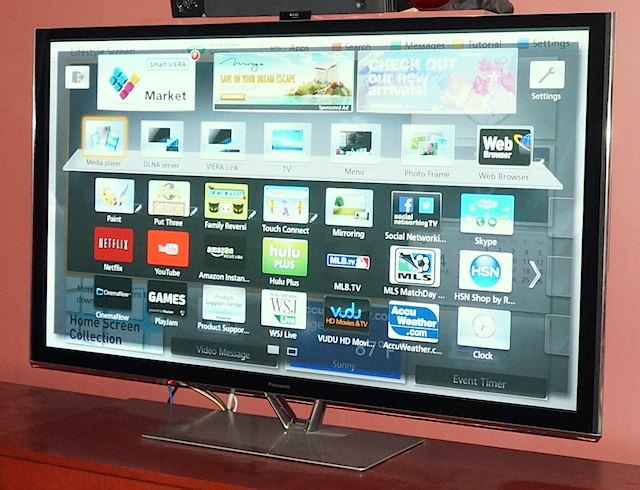
My HDTV: Panasonic TC-P55VT60

When I heard Pioneer was getting out of the plasma TV business (as of last month), I figured it was the best time to replace my beloved 50-inch Pioneer Kuro PDP-5020FD plasma, formerly the best TV ever made, with this 55-inch second-from-the-top-of-the-line Pioneer (my Pioneer is now our bedroom TV) plasma since Panasonic made the best plasma sets and plasma TVs are superior to LCD LED. Why not the top-of-the-line ZT60? The ZT 60 didn't come in a 55-inch model (I didn't have the room for a 60-incher), and the VT comes with a pop-up camera for Skype calling.

Buying Advice: Buy a 3D plasma -- they're the best 2D sets available (4K UHD TVs are just a rip-off right now, if you could even tell the difference from a regular HDTV, which you can't). You can still find some Panasonic plasmas for sale online (my own model can be found from varying Amazon sellers), or get a plasma from the last two plasma TV vendors, Samsung or LG.

2014-04-09-TiVoscreen.jpg

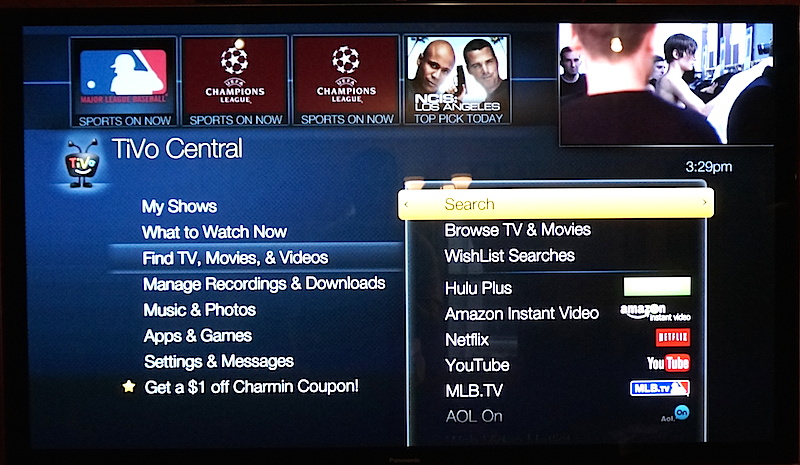
My Media Streamer: TiVo Roamio

Since I am a tech reviewer I have an Apple TV and a Roku and just got an Amazon Fire TV that I'll be reviewing for Techlicious next week. But to me, having a cable TV box and a separate media streamer seems stupid when you can have better versions of both in one box, TiVo's Roamio DVR/media streamer. I can record up to four shows at once (as opposed to two, the limit of most cable boxes), record up to 450 hours of HD stuff (depending on what version of Roamio you buy), you get access to popular streaming services such as Netflix and Hulu, and when you search, TiVo searches everything it has access to -- cable TV and streaming services. An elegant, all-access (if pricy) TV watching solution.

Buying Advice: TiVo requires a cable card, which many cable companies balk to support, and you may need something called a "tuner adapter" box.

2014-04-09-Sonyreceiver.jpg

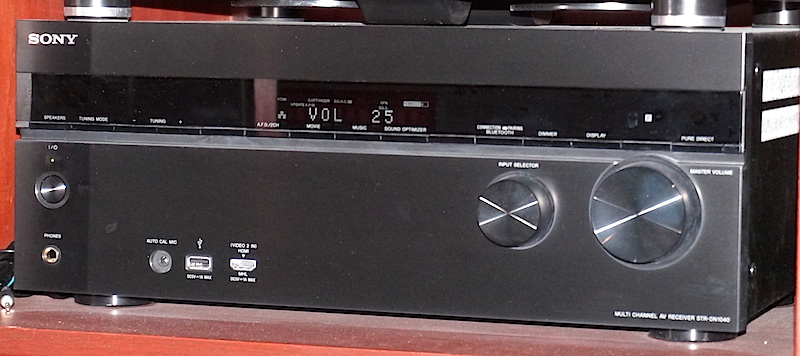
My Audio/Video Receiver: Sony STR-DN1040

After much research and consultation with fellow tech wizards, I determined this Sony surround sound receiver ($599.99) offered the highest/best build, power, audio, features and reputation quality as well as most HDMI inputs for the lowest price, an A/V receiver perfect storm.

Buying Advice: Consider Denon, Onkyo, Yamaha and Pioneer AVRs, all of which I've owned at one time or another, and make sure your choice includes enough HDMI inputs to accommodate all your devices. If you plan on buying a new 4K UHD TV (and I still recommend you don't), get an AV receiver with HDMI 2.0 inputs. And match your prospective receiver's power to the minimum power requirement of your speakers (and vice versa).

2014-04-09-Bose802.jpg

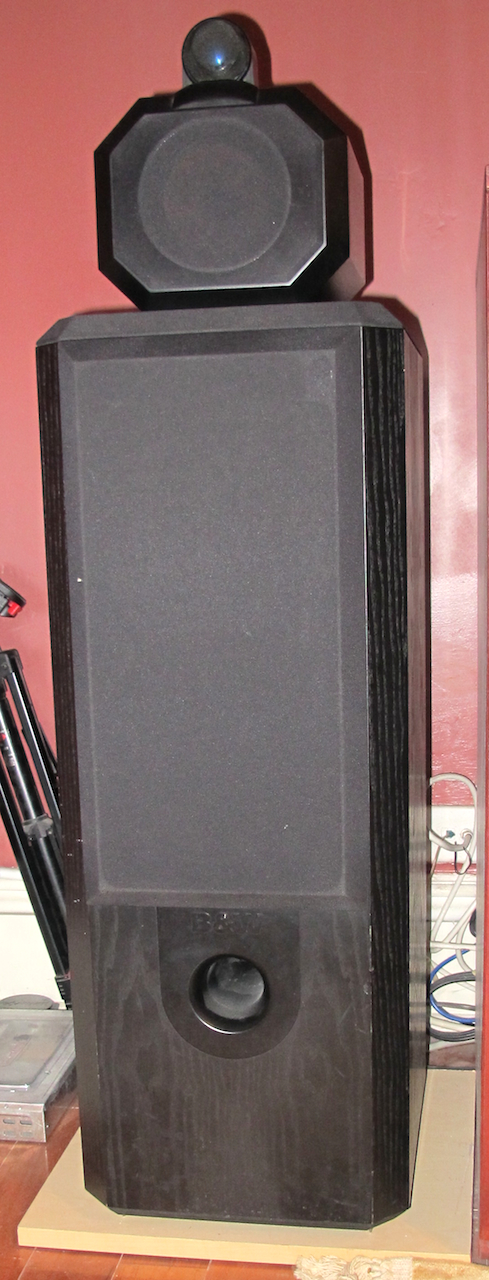
My Speakers: B&W Matrix 802 Series 2

These mammoth B&W Matrix 802 Series 2 speakers are at least 20 years old, the oldest still-working gadgets I own; I have since added matching surround sound speakers. B&W has updated them many times -- here are the current versions -- but I love the smooth, warm sound these classics produce. How much are the new 802s? If you have to ask... In my bedroom, my Pioneer Kuro sits atop a ZVOX SoundBase V-420 "sound plate" ($249.99). ZVOX makes the best add-on IMHO and, as far as I can tell, originated the "sound plate" speaker that many companies are now copying.

Buying advice: Always take familiar music with you to a store to audition speakers, and listen at low -- not high -- volume levels, since that's how you'll likely listen at home.

2014-04-09-PlantronicsVoyagerLegend.jpg

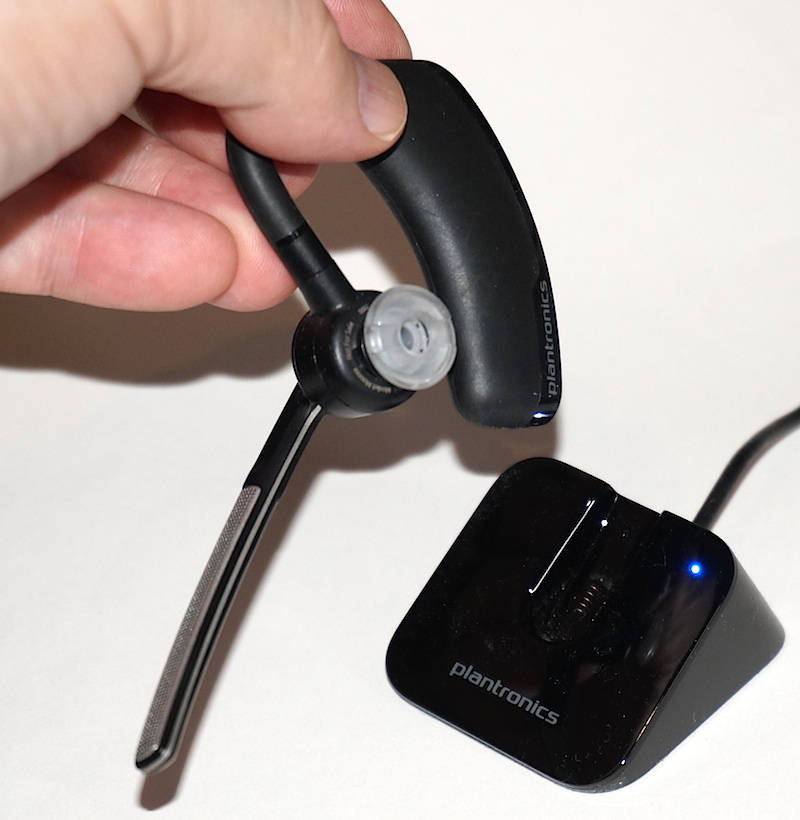
My Bluetooth Headset: Plantronics Voyager Legend

Like the pizza box says, I've tried the rest, now try the best. No one makes a better Bluetooth headset -- best sounding, longest range -- than Plantronics (good enough for NASA, good enough for me), and my own Plantronics is the Voyager Legend ($99.99). You can read a more extensive comparison with many of the leading Bluetooth earpieces here.

Buying advice: Simple: Plantronics. Period.

2014-04-09-ShureSE215.jpg

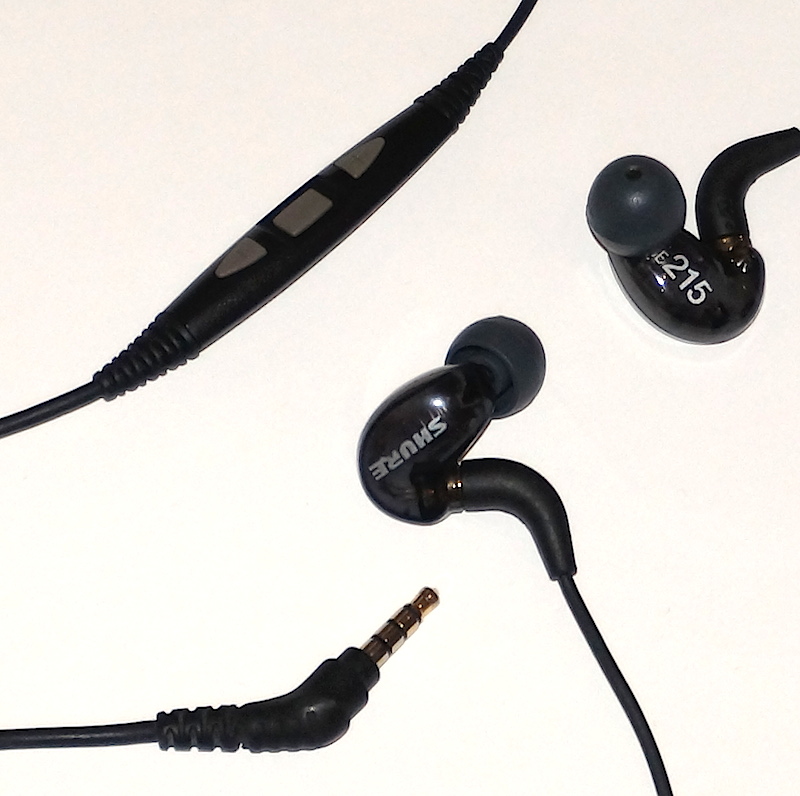
My Music Listening Earphones: Wired -- Shure SE215/Bluetooth -- LG HBS730

When I leave the house (which isn't often -- it's scary out there!), I opt for either the Shure SE215 ($99.99) or the LG Tone+ HBS730 stereo Bluetooth in-ear phones ($69.99) (read why here), although I'm awaiting on the update, the LG Tone Ultra HBS800 ($129.99). As to the Shure SE215, it offers far and away the best sound for the money; in fact, an astounding high audio quality for less than $100, and swivel earpieces so they sit flat in your ear in case you put ear to pillow. Sound isolating earphones such as the SE215s are aptly named; the buds completely block the ear canal and eliminate the need for more expensive noise canceling earphones. Even more astounding are the sound and the price of Shure's new SE112 ($49.99), which my audiophile friend Seiji guessed cost $250 and now won't return. Well, he can't hear me ask because he won't take them out of his ears.

Buying Advice: You do not need noise canceling earphones or headphones. Any noise isolating earphones or full-cup headphones will do the job sans worrying about batteries.

2014-04-09-iMac.jpg

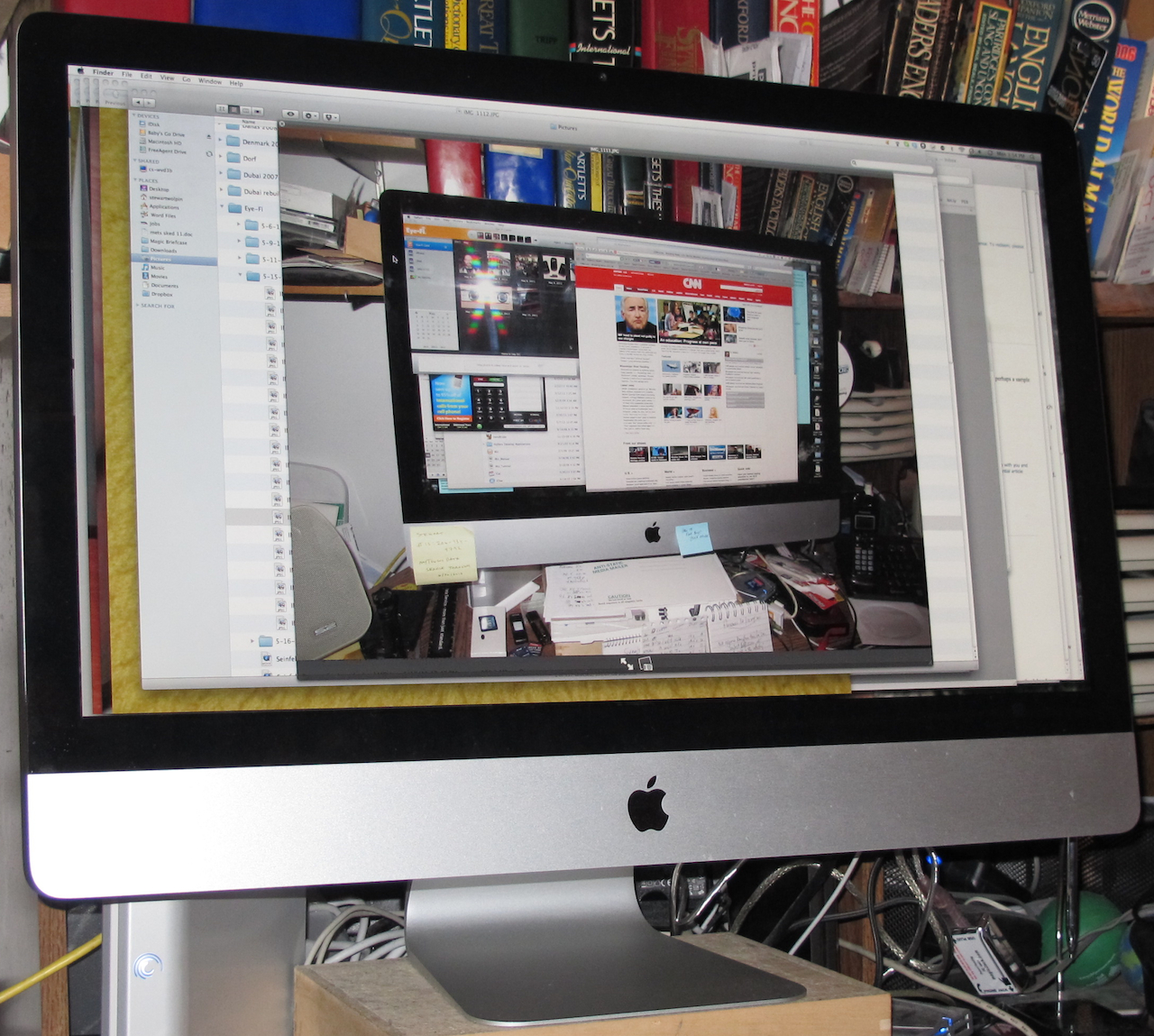
My PC: Apple iMac

Actually a 2009 model-year 27-inch iMac and, after nearly five years -- the longest I've ever owned a PC -- so far, so good. I've been a Mac user ever since the first one 1984 (how old am I?) On the road, I tote an original MacBook Air.

Buying Advice: I'm not going to say "Apple" because if you own a Mac you'll definitely stick with Mac, and if you own a Windows PC, you probably maybe will stick with Windows -- I won't convince you to switch in these 125 words or less. But if you are looking to buy a new PC, don't justify paying less by rationalizing "that's all I need." Opt for top-of-the-line in memory and power. Why? "Just enough" always ends up being nearly instantly obsolete. By over-buying you'll prolong both the need to add-on and your jonesing for a new, more powerful model, saving money in the long run, like I have.

2014-04-09-Asusrouter.jpg

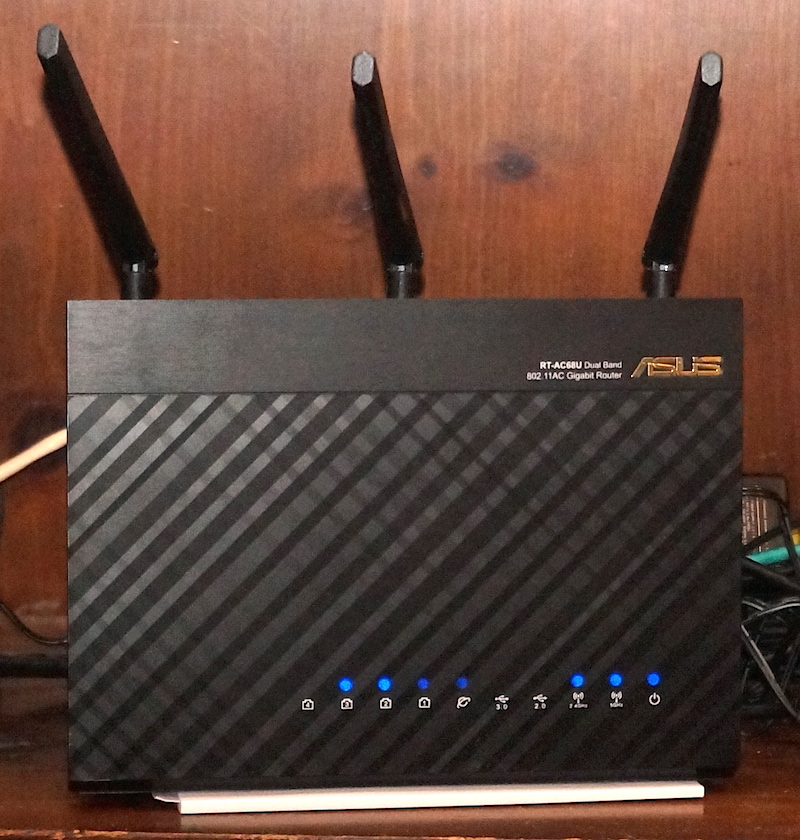
My Wi-Fi Router: Asus AC68U

Even though my two-bedroom Manhattan apartment is relatively compact (an understatement, but it's home) I live in a wireless wonderland where routers go to die. My router is in my home office, but the signal dies just one room away -- until I found this Asus AC68U Wi-Fi router. Not only was this Asus easy to set up, but it delivered all four Wi-Fi bars of service all over my apartment, even on devices with poor AV reception. Easily the most useful and satisfying purchase I have made all year, and I'm not alone in my opinion.

Buying Advice: Regardless of which brand and model router you choose, get one with AC (802.11ac) "gigabit" Wi-Fi. 802.11ac is the latest and fastest Wi-Fi protocol, and even if your gear isn't AC-compatible, all new gear -- smartphones, tablets, laptops, et al -- will be.

2014-04-09-1365SonyNEX3nreviewcopy.jpg

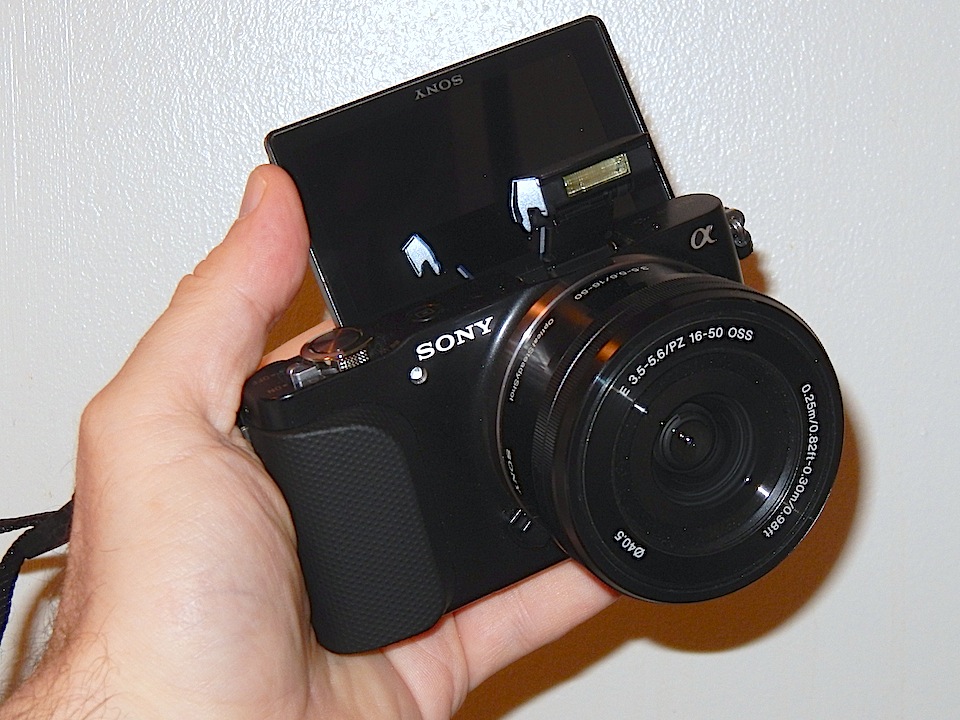
My Digital Camera: Sony Alpha NEX-3N

All the photos in this roundup were taken by my now discontinued Alpha NEX-3N ($389.99, marked down from $499.99). Why this year-old camera, which has just been replaced by the Alpha a5000 (hence the discounted price)? Like many of my other gadget choices, it came down to value for the money. For less than $500, I got a compact interchangeable lens camera (although I have yet to buy a second lens) with an articulating pop-up flash, power zoom and tilt-angle LCD screen, a trio of features unavailable at such a low price. Oh, and it takes great photos.

Buying Advice: Check the specs to see how many photos you can take on one battery charge. The new Sony a5000 snaps 420 shots on a single charge, for instance.

If you know a gadget geek, don't look for affirmation when it's too late. Ask their advice before you buy. Or, leave me a comment below if you have a purchase decision you're wrestling with and I'll try to help.

Tuesday, April 8, 2014

The Inspiration and Sometimes Frightening Power of Innovation

I vividly remember my fifth grade trip to COSI (Center of Science and Industry in Columbus Ohio) as opening my eyes to the power of science and technology. After that weekend the world looked different to me and it created a curiosity that I'd never lose. This past weekend, I felt a similar spark attending IPP, a joint venture between Singularity University and xPrize.

A smorgasbord of innovation across artificial intelligence, biotech, medicine, wearables, cyber security, 3D printing, crowdsourcing, quantum computing and beyond -- yet the power of the event was much more than these individual game changers, but in looking at their combination. It brought together large global organizations with startups and early leaders in these spaces. [topcoder] came to present about how crowdsourcing and open innovation can lead to revolutionary results, but like everyone else attending, left with in awe of the sheer number of revolutionary advancements occurring in our time.

I evangelize to business leaders every day about the increasing rate of change and how critical it is to their business strategy -- yet even I was stunned by how fast and dramatic and broad that change actually is. Exponential leaps were the focus and in a very literal sense.

Will 3D printing render manufacturing in your industry obsolete as consumers do it themselves? Will it be a new field of medicine to use 3D printed components for our body? What does medical care look like when patients can walk in to their doctors office with their whole genome mapped? How can quantum computing provide new insights into genomics or instant analysis of all the data coming from wearables everywhere? What happens when millions of people can help you design, create and advance your products or your competitors? Could we personalize my food, medicine, and products based on millions of other people and/or advanced genomic analysis? How will our security keep pace with this advancement when criminals can operate without regulation?

These are just a small fraction of the kinds of questions that you can see are very real for all of us right now. It represents great risk and opportunity for companies big and small. Here are a few of my favorite quotes, facts, insights and inspirations from the weekend. The future is coming -- whether we are ready for it or not.